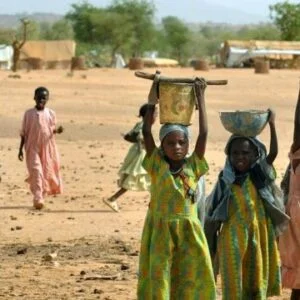

New York, 20 November 2023 – The escalating humanitarian crisis in Sudan over the past seven months has reached a dire stage in Darfur, where at least 5 million children face severe deprivation of their rights and protection risks due to the ongoing conflict.
Since the outbreak of war on 15 April, over 3,130 cases of grave violations of children’s rights have been reported across the country, with at least half of these cases occurring in Darfur. This is only the tip of the iceberg, with severe underreporting due to communication blackouts and lack of access.
“Sudan – especially Darfur – has become a living hell for millions of children for more than half a year, with thousands targeted based on ethnicity, and subjected to killing, injury, abuse, and exploitation daily. This is unacceptable,” said Catherine Russell, UNICEF Executive Director. “Children have suffered enough, and their parents and grandparents still bear the scars of previous cycles of violence. We cannot allow this to happen again. All parties to the conflict must cease fighting and respect international law. We cannot afford for Sudan to become a forgotten crisis.”
The reported number of grave violations of children’s rights in Darfur represents a 450 percent increase compared to the verified number in all of 2022. Among all reported killings and mutilations across Sudan, 51 percent involve children in Darfur. Additionally, 48 percent of all reported cases of sexual violence in Sudan occur in Darfur, and UNICEF continues to receive alarming reports of child recruitment.
Beyond the multiple levels of violence, more than 1.2 million children under the age of five in Darfur suffer from severe malnutrition, with 218,000 experiencing severe acute malnutrition, the most life-threatening form. Without urgent treatment and life-saving services, they face a high risk of death.
The recent escalation in fighting has also triggered large-scale displacement, with 1.7 million new internally displaced persons in Darfur, approximately 40 percent of the country’s total, half of whom are children.
Vital services in Darfur, including health care and protection, have collapsed due to restricted access, looting, and financial shortages, worsened by attacks on frontline workers. Nurses, teachers, doctors, and social workers have not received salaries for months, and critical infrastructure, including water networks and hospitals, has been damaged or depleted.
Amid the ongoing conflict, beyond the direct destruction and loss of life, a generation of children in Darfur faces the risk of losing their right to education, with almost all 4,000 formal schools in the region closed.
UNICEF, in cooperation with partners, is delivering life-saving supplies to Darfur, supporting frontline workers, and maintaining essential infrastructure to provide health, nutrition, water, sanitation, hygiene, learning, and vital protection services for 2.2 million children and family members. However, much more remains to be done, and UNICEF urges the international community to accelerate funding for life-saving basic services, strengthen resilience, and intensify advocacy to ensure unrestricted access.
An immediate humanitarian ceasefire is urgently needed. UNICEF reiterates its call for all parties to the conflict to respect international humanitarian law and human rights law, halt grave violations against children, allow unrestricted access, and remove bureaucratic barriers that impede timely and widespread assistance to millions of the most vulnerable children and families across Sudan.